Features / Demo 0.10.3
Everything in the lab
What SOMAsimulates.
SOMA Body Lab is a physics and anatomy sandbox built by one developer with three.js, WebGPU and cannon-es. Here’s the full list, minus the marketing adjectives.
One body, four layers.
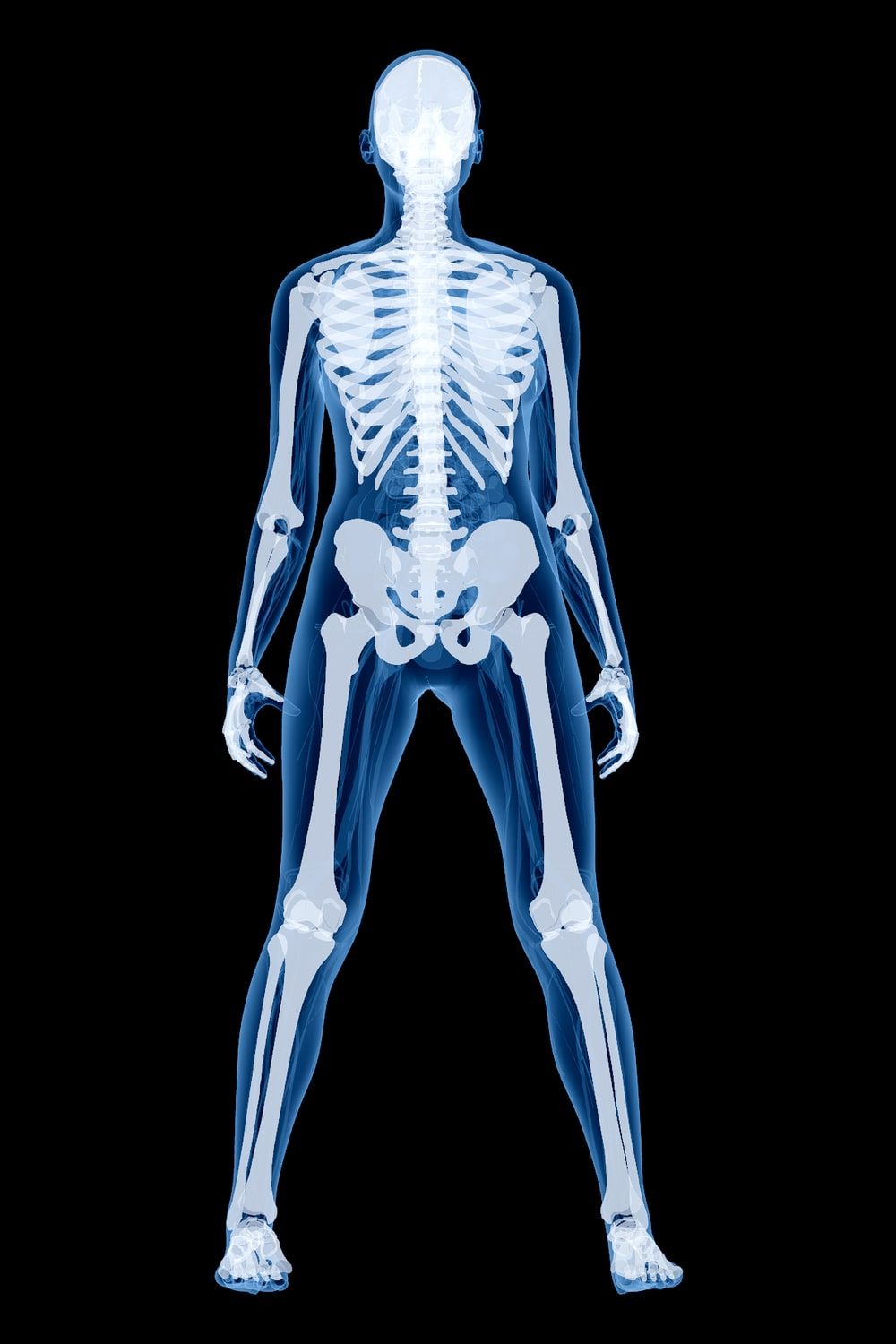
Skin, muscles, organs and X-ray on one body. Soft tissue has real volume and moves like it, the ragdoll has natural joint limits, and movement comes from motion capture. In numbers: 373 bones, 166 organ parts, 936 vessels and 321 nerves.
- Skin: soft tissue with real volume
- Muscles: the muscle layer under the skin
- Organs: 166 organ parts, 936 vessels
- X-ray: 373 bones, 321 nerves
Medicine and the patient monitor.
A simulated circulation drives everything. Blood loss lowers her pressure, her heart tries to compensate, and shock comes on in stages. You treat it with the tools a medic would use and watch the result on the monitor.
- Blood loss and shock stages
- Medications that act on her vitals
- Patient monitor with ECG, detachable into its own window
- Defibrillator
- CPR with a metronome
- Healing in time-lapse
- First aid by hand: plaster, pressure bandage, tourniquet, pulse check
Rescue first, then surgery.
A rescue mission in first person: tourniquet, pressure bandage, pelvic binder, IV line. Then the operating table, where you do the surgery yourself while her vitals keep changing, and a grade from A to F at the end.
- Respond: first person, on scene
- Tourniquet: stop the bleeding
- Pressure bandage: hold it
- Pelvic binder: stabilize
- IV line: fluids in
- Operating table: surgery, vitals live
- Grade A–F: how did you do
She reacts.
She behaves like a person. She dodges, surrenders, holds her wounds and crawls to the first-aid kit. She catches herself when she stumbles, braces against walls, protects her head when she falls and gets back up over all fours. With heavy blood loss she turns pale and slides down the wall, and she speaks with lip sync.
- She dodges
- She surrenders
- She holds her wounds
- She crawls to the first-aid kit
- She catches herself, braces and gets back up
- She goes into visible shock
- Voice with lip sync
Two characters, up to six people.
Gloria V2, rebuilt from a real body scan, and Felix (beta). Up to 6 people in one scene, every one of them simulated. Customize body shape, four body fat levels, skin tone, strand-based hair, 44 tattoos, piercings and clothing with fabric patterns.
- Body shape
- Four body fat levels
- Skin tone
- Strand-based hair
- 44 tattoos
- Piercings
- Clothing with fabric patterns
Sandbox.
First-person camera, tools on keys 1 to 9, props, slow motion and instant replay. Battle Mode puts two fighters one-on-one in one of 4 arenas. Injuries and Battle Mode are in the game; this page describes them but doesn’t show them.
- First-person camera
- Tools on keys 1–9
- Props to throw and stack
- Slow motion
- Instant replay
- Tool wheel on Tab
- The house map (beta): day and night, street lamps, a dog and a car to drive
- Two new worlds: a shower cabin and an examination room
- Battle Mode: 1 vs 1, 4 arenas
Places to be in.
The lab studio with its backdrops and light moods, the house as a beta, and since 0.10.1 a shower cabin and an examination room. Every world is picked from one menu with preview pictures.
- Studio: backdrops and light moods
- The house (beta): two floors, a garden, a garage, a car to drive, day and night
- Shower cabin: running water and steam, skin and clothes get wet, blood washes off
- Examination room: a live patient monitor, an examination lamp and an instrument trolley
System requirements.
The demo runs on Windows PCs and, as betas, on Macs with an Apple chip and on Android. It renders with WebGPU and falls back to WebGL 2.
- OS
- Windows 10 or 11, 64-bit · Mac with an Apple chip (beta) · Android (beta)
- GPU
- DirectX 12 graphics card from around 2016 or newer: GeForce GTX 900, Radeon RX 400 or Intel Iris Xe
- Memory
- 8 GB RAM
- Renderer
- WebGPU, with a fallback to WebGL 2
See it run.Free demo.